

Real Solutions for Back Pain
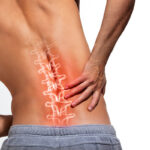
Are you struggling with intense lower back pain? Do you notice straightening up all the way is painful or impossible? Did this pain start after lifting something heavy or twisting your back? If you nodded ‘yes’ to these questions, you might have a condition known as a herniated disc. Don’t worry; there are proven strategies that can help you feel good again! Herniated discs are not always painful, but they can be excruciating when they are. Due to the severity of pain associated with a herniated disc, people will try to avoid hurting themselves more and avoid activity. Unfortunately, misguided healthcare practitioners still recommend rest or, worse, bed rest, which is why getting proper treatment is essential! At iMove PT, our team of specialized physical therapists is fully equipped to guide you toward the relief you’ve been seeking, allowing you to get back to the activities you genuinely love without pain!

Understanding the Nitty-Gritty of a Herniated Disc
To understand what a herniated disc is, it’s important first to understand the role of spinal discs. Your discs are like shock absorbers in your spine, absorbing compressive forces and permitting smooth, free movements like bending forward, backward, and rotating.
However, as we age, our discs naturally degenerate, begin to dry out, become more stiff, and weaken, becoming more susceptible to herniation. Think of your discs as being like grapes when you’re young and then drying up to be more like raisins as you age.
In addition to age, several variables can elevate your risk of experiencing a herniated disc, including:
- Genetics: Family history may play a role in increasing the risk of developing a herniated disc.
- Smoking: Cigarettes are thought to reduce the supply of oxygen to the disc, causing it to break down more quickly than it normally would.
- Occupation: Those engaged in jobs requiring repetitive motions like lifting, bending, and twisting are also more susceptible.
- Sedentary Lifestyle: Long durations of sitting, especially in incorrect postures, contribute to increased risk.
A herniated disc occurs when the soft, gel-like substance in the middle of the disc breaks through the inner aspect of the disc and protrudes out, usually in the back wall of the disc. This bulging out can pinch the nearby spinal nerves, leading to inflammation and excruciating pain that might even radiate down your leg or arm.
Even when the disc doesn’t affect the nerves, it is infamous for causing sharp and intense pain in the lower back, affecting your ability to move, especially standing upright, and interfering with your overall quality of life. For some, the pain is so unbearable that it hampers even the simplest daily tasks, like sitting, moving, or lying down to sleep.
The silver lining? Our skilled physical therapists can teach you how to manage your debilitating pain and provide the tools to return to a pain-free life!

Our Mobile Physical Therapy Services
At iMove PT, we offer a comprehensive range of mobile physical therapy services designed to cater to your unique needs. Our expertise spans orthopedic rehabilitation, sports medicine, neurological rehabilitation, geriatric physical therapy, and pre and post-surgical rehabilitation. By providing targeted, specialized care, we ensure that our clients receive the most effective treatment and support throughout their recovery journey. Our mobile services bring this personalized approach directly to your doorstep, making your physical therapy experience more convenient and accessible than ever before. We understand that every client’s journey to recovery is unique, which is why we prioritize personalized treatment plans, skilled and licensed therapists, flexible scheduling, and ongoing support. At iMove PT, our commitment to your well-being extends beyond treating injuries and conditions.
Effective Solutions for Herniated Disc
At your first visit, one of our experienced physical therapists will perform a comprehensive assessment, including a medical history and physical examination. Afterward, your physical therapist will design a personalized treatment plan specifically for your unique situation that may include the following:
- Manual Therapy: Our physical therapists use passive movement techniques, called mobilizations, to improve the range of motion in the spine, reducing stiffness and pain.
- Stretching and Mobility Exercises: Targeted stretches to improve spine mobility and muscle flexibility are often the starting point. As you move better, you’ll feel better!
- Core Strengthening: Exercises like planks and bridges can help stabilize the spine and help in improving proper techniques when performing movements like squatting or lifting activities.
- Neural Mobilization: Our therapists may use neural mobilization or “nerve gliding” exercises to relieve nerve tension, which can reduce the radiating pain commonly associated with herniated discs.
Understanding the condition and its management is crucial. Our experts often educate the patient about body mechanics, lifestyle changes, and long-term exercise strategies to prevent future episodes. We know that your first step to recovery starts with understanding.

Why Wait?
Call iMove PT today for a comprehensive evaluation and learn the steps you can actively take to recover from a herniated disc and guard against future occurrences. Book your life-changing appointment today!
Imaging for Low Back Pain
By Dr. Alex Booher
Low back pain is one of the most frequent reasons people seek medical care from both Physicians and Physical Therapists. The most appropriate first step in evaluating an individual with low back pain is a comprehensive physical examination. This involves a variety of observations and tests including: range of motion, strength, neurological examination, and a thorough postural assessment. In many cases, an appropriate course of treatment can begin based on the physical examination, but other times a closer look is needed.
X-ray
The most common, quickest, and easiest to perform method is a standard x-ray. While they do not assess soft tissue damage such as a muscle strain, disc bulge, or pinched nerve, x-rays can give your healthcare provider a proper assessment of the bones/joints in the spine. X-rays in the lower back are best to assess arthritis, degenerative joint disease, evaluating for trauma (fractures), and to rule out rare but serious conditions like tumors or bone infections.
CT Scan
CT (Computed Tomography) scans are sometimes used to assess low back pain, though they are not the first line of imaging for most cases. CT scans provide more clarity than x-rays but are reserved for specific cases such as: when MRI is not an option, to plan complex surgical procedures, and to detect for bony abnormalities.
MRI
MRIs (Magnetic Resonance Imaging) are often used in diagnosing and assessing low back pain when detailed information about the soft tissues, discs, and nerves of the spine is needed. Unlike X-rays or CT scans, which are better suited for visualizing bones, MRIs provide a comprehensive view of the soft tissues and can help assess nerve involvement.
Do I need imaging?
For the majority of patients, conservative treatment, including physical therapy, is recommended before resorting to imaging. Taking an active approach to your recovery is the best method and imaging can be utilized as a secondary measure if your symptoms do not improve with a conservative approach.

Dr. Alex Booher (PT, DPT, CEEAA)
Dr. Alex Booher has over 6 years of experience in outpatient orthopedic Physical Therapy, treating patients with a variety of conditions ranging from post-surgical rehabilitation, fracture care, orthopedic injuries, and neurological conditions with emphasis on gait, balance, and postural retraining. He graduated from Maryville University in 2017 with a Doctorate in Physical Therapy.
Alex joined iMove PT St. Louis in August 2021 and in August 2023 he launched iMove PT Metro East IL as the franchise owner. In his free time, Alex enjoys spending time with his wife and two daughters and cheering on St. Louis City SC as a proud season ticket holder.
HAVE YOU MET YOUR ANNUAL INSURANCE DEDUCTIBLE?
An insurance deductible is the amount of money that you must pay before your insurance company pays for your medical services. If your deductible is met, your Physical Therapy may not cost you anything. Patients with family plans or those who have had major surgeries or have a chronic illness are especially likely to have a $0 balance remaining on their out-of-pocket expenses. This means that the cost of physical therapy could be minimal or completely covered by the patient’s insurance plan. If you are close to or have met your insurance deductible for the year, then now is the time to come in for Physical Therapy! Are you feeling aches and pains? Need to work on your core? Let us help you get a head start for 2025.
Unconventional Tips to Help Your Back Pain
Back pain is one of the most common ailments affecting adults worldwide. Here are a few uncommon yet highly effective tips for preventing back pain that you can try at home.
Diaphragmatic Breathing
Diaphragmatic breathing is not just for Yoga enthusiasts. This breathing technique engages your diaphragm, reduces your heart rate, and helps in relaxation. Surprisingly, it also helps in stabilizing your core. A strong core can better support your back, preventing back pain.
How to do it:
- Lie on your back with your knees bent. Place one hand on your chest and another on your abdomen.
- Inhale deeply through your nose, allowing only your abdomen to rise.
- Exhale through your mouth, engaging your core muscles.
- Practice this for 5-10 minutes daily.
Dynamic Sitting
Sitting for prolonged periods is a leading cause of back pain. Dynamic sitting encourages movement even while seated, making your core muscles work in maintaining posture.
How to do it:
- Choose a chair that allows freedom of movement. Swivel chairs are a good choice.
- Shift your weight periodically and tilt your pelvis by moving your belly button forward, and then tilt your pelvis back, allowing your lower back to “slouch” slightly backward.
- Engage your core muscles intermittently while sitting using the same diaphragmatic breathing mentioned above.
Video Tips Of The Month
Mid Back Rotation
Side Lying Mid/Low Back Rotation