

How Everyday Spine Care Can Provide Long-Term Pain Relief
Have you been dealing with back pain for a long time? Are you wondering what you can do to find lasting relief? At iMove PT, our team of physical therapists provides you with answers and a program to help you find relief that lasts!
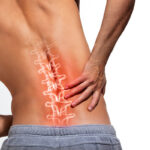
Your spine is made up of a complex structure of bones, muscles, ligaments, nerves, and discs. These structures work together to support the body and allow us to move around. Most episodes of back pain affect one or a combination of all these components.
Back pain can result from injury, physical activity, or even prolonged inactivity. It can affect people of any age or gender, and often the exact cause remains unclear. Damage to one or more of these structures can result from strain, injury, or prolonged postures and lead to debilitating pain and loss of mobility.
The good news is that with guidance from the iMove PT physical therapists, you can find solutions to your pain and how to manage it, so you can get back to living the life you enjoy!

What are the Common Causes of Back Pain?
Back pain can be one of the most debilitating conditions, affecting up to 80% of the population at some time in their life. However, many of these diagnoses are non-specific, meaning they don’t stem from a condition but rather a blend of factors. This lack of certainty means that not only do people suffer from back pain, but the exact cause may be difficult to identify.
That said, the source of back pain is most commonly from the spine itself or the tissues surrounding the spine. Often, back pain originates from an injury or irritation of the muscles, joints (including the intervertebral discs and facet joints), nerves, or surrounding ligaments, as well as other soft tissues.
The most common factors associated with back pain are:
- Improper posture or prolonged positions (i.e., prolonged sitting)
- Lifting strains
- Repetitive movements like bending and twisting
- Trauma from accidents or falls
Our therapists will assess your particular condition to identify the contributing factors and address all of them. Rather than focusing on one cause of your pain, your therapist will address all of the causes.
More About Our Root-Cause Approach to Back Pain
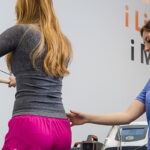
Your treatment begins with a detailed one-on-one evaluation. We’ll look beyond where the pain is felt to understand why it started. This includes how you move, how your muscles work together, and how your spine responds to daily stress. From there, we’ll create a customized treatment plan tailored to your needs, blending hands-on care, movement retraining, and other targeted techniques.
Evidence-Based Treatment Techniques to Improve Spinal Health
Manual Therapy to Restore Movement and Reduce Pain
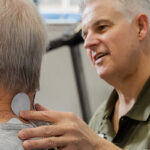
Manual therapy uses hands-on techniques to improve joint motion and relax tight muscles that limit movement. This approach helps decrease pain while restoring normal spinal motion needed for daily activities.
Dry Needling for Muscle Tension and Pain Relief
Dry needling targets tight muscle knots that can cause pain and restrict movement. By calming overactive muscles and improving circulation, this technique helps restore normal muscle function.
NEUBIE Electrical Stimulation for Neuromuscular Re-education
NEUBIE electrical stimulation helps retrain the nervous system so that muscles activate correctly. This improves coordination and strength while reducing strain on the spine.
Targeted Exercise to Build Strength and Support the Spine
Therapeutic exercise focuses on strengthening the muscles that support the spine, including the core and hips. Improved strength and control reduce stress on the back and help prevent recurring pain.
Posture and Movement Training for Everyday Activities
Posture and movement training teaches safer ways to sit, stand, lift, and move throughout the day. These changes reduce repeated stress on the spine and support long-term back health.
Treating the Whole Person, Not Just the Spine
We understand that back pain often involves more than muscles and joints. Depending on your needs, we might also work on improving your balance and coordination, walk you through breathing patterns that affect spinal stability, or identify other areas of focus to help you feel your best.

Our Mobile Physical Therapy Services
At iMove PT, we offer a comprehensive range of mobile physical therapy services designed to cater to your unique needs. Our expertise spans orthopedic rehabilitation, sports medicine, neurological rehabilitation, geriatric physical therapy, and pre and post-surgical rehabilitation. By providing targeted, specialized care, we ensure that our clients receive the most effective treatment and support throughout their recovery journey. Our mobile services bring this personalized approach directly to your doorstep, making your physical therapy experience more convenient and accessible than ever before. We understand that every client’s journey to recovery is unique, which is why we prioritize personalized treatment plans, skilled and licensed therapists, flexible scheduling, and ongoing support. At iMove PT, our commitment to your well-being extends beyond treating injuries and conditions.
iMove PT SWMO Emphasizes Access to Neurological Physical Therapy Through Mobile Care

iMove PT SWMO provides comprehensive neurological physical therapy through a one-on-one care model, where one physical therapist works with one patient in the patient’s home or location of choice. Neurological rehabilitation often involves complex conditions that require specialized clinical training and a commitment to treating patients whose needs extend beyond traditional orthopedic care.
iMove PT SWMO routinely treats individuals with diagnoses such as stroke, spinal cord injury, multiple sclerosis, traumatic brain injury, Parkinson’s disease, and other neurological conditions. These patients commonly experience impairments in mobility, balance, coordination, and functional independence, requiring individualized and skilled therapy interventions.
In addition, iMove PT SWMO operates as a mobile physical therapy provider, delivering care in the patient’s preferred environment, including private homes and residential settings. This model helps eliminate transportation barriers—which can be particularly challenging for individuals with neurological conditions—and allows therapy to take place in the environments where patients live and function daily.
If you are experiencing impairments in mobility, balance, coordination, or functional independence, iMove PT SWMO may be the right physical therapy provider for you.
Contact Us For an Appointment
The therapists at iMove PT can provide you with the tools to promote your independence in managing the current pain and even future recurrences. Call our clinic today for a comprehensive assessment and learn what steps you can take to alleviate your pain for the long term!
Recipe of the Month: Yogurt Covered Strawberries

Ingredients:
- 12 strawberries
- 10 ounces vanilla Greek yogurt
- pink food coloring

Instructions:
- Wash the strawberries and pat them dry. No moisture should remain on the berries before dipping them in the yogurt. Place a piece of parchment paper on a large plate or cutting board.
- Place the yogurt in a small bowl and holding onto the green leaves, dip each strawberry into the yogurt. Swirl it around to cover the berry, leaving a little red at the top. Place each yogurt dipped strawberry on the parchment paper. When you have dipped all the strawberries, place them in the freezer for 15 to 20 minutes.
- Dip the strawberries a second time in the yogurt. To get a gradient of pinks, dip 4 berries in the yogurt with no food coloring, then add a single drop of pink food coloring to the yogurt and stir it till combined. Dip four more berries in the yogurt. Then add another drop of food coloring to the yogurt and stir to combine. Dip the remaining four berries in the yogurt.
- Place the strawberries back in the freezer for 40 minutes to 1 hour. The frozen yogurt will begin melting when you remove the berries from the freezer, so only pull them out when you are ready to serve them.
Exercise Of The Month
Bridging
Begin on your back. Bend your knees and keep your back flat on the ground. Gently, contract your abdominals and hold to keep your back flat as you move up into the bridge position. Remember to breathe. Gently, squeeze your butt muscles and lift your hips off the ground. The goal is to have your hips aligned with your knees and shoulders. Hold for 5 seconds.
3 Sets, 10 Reps.
Sources
- https://thishealthytable.com/blog/yogurt-covered-strawberries/
- https://pubmed.ncbi.nlm.nih.gov/28789465/,
- https://pubmed.ncbi.nlm.nih.gov/32669487/,
- https://pubmed.ncbi.nlm.nih.gov/29602304/,
- https://www.cochranelibrary.com/cdsr/doi/10.1002/14651858.CD004057.pub3/full?highlightAbstract=back%7Cpain,
- https://www.jospt.org/doi/full/10.2519/jospt.2018.7562,
- https://academic.oup.com/ptj/article/95/2/267/2684157